
Reviewed within 24 hours
ISO 9001 Certified Clinic
Why laser hemorrhoid treatment gets patients back to normal life faster than traditional surgery, and what that recovery actually looks like, day by day.

If you’ve been putting off hemorrhoid treatment because you’re dreading a long, painful recovery, that fear is usually based on traditional surgery, not the options available today. Minimally invasive laser treatment was developed specifically to shorten the part of the process that keeps most people away from a specialist in the first place: healing.
Here’s what actually makes the difference, and what a realistic recovery timeline looks like.
Conventional hemorrhoidectomy involves surgically excising hemorrhoidal tissue, which leaves an open wound in a part of the body that’s in near-constant use. That combination, an open surgical site plus the mechanical stress of daily bowel movements, is what drives the long recovery most people associate with hemorrhoid surgery: several weeks of pain, careful diet management, and limited activity.
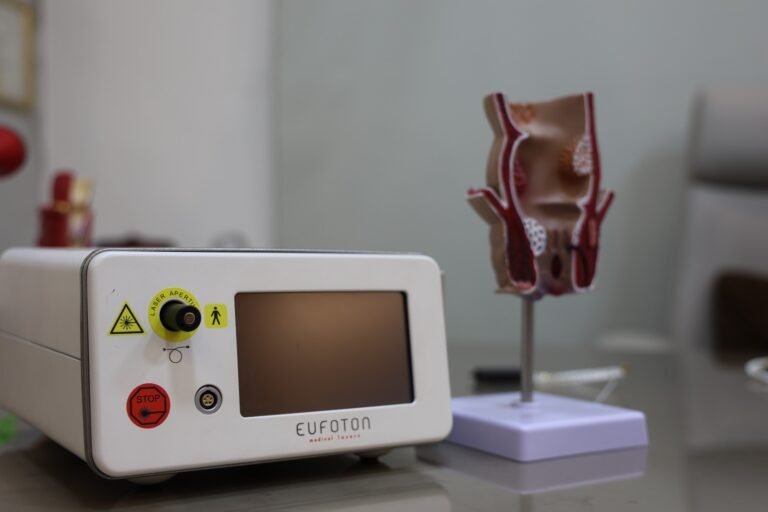
The recovery advantage isn’t marketing, it comes from a genuine difference in how the tissue is treated. Instead of cutting the hemorrhoid away, a fine laser fiber delivers controlled energy directly into the hemorrhoidal tissue, causing it to shrink from within. Proctoclinic uses a 1940 nm diode laser specifically because that wavelength is well absorbed by soft tissue, allowing precise, controlled energy delivery with a narrower zone of surrounding tissue disruption.
In practical terms, that means:
Less tissue trauma means less inflammation, and less inflammation is one of the biggest drivers of post-surgical pain and slow healing.
No large open wound means there’s no extended healing surface exposed to the mechanical stress of daily bowel movements, which is the single biggest source of discomfort during traditional recovery.
This isn’t just a single clinic’s claim. A 2024 systematic review covering 2,492 patients found laser hemorrhoidoplasty was associated with significantly lower pain, shorter procedure duration, and fewer complications compared to open surgery, with no significant difference in recurrence for most hemorrhoid grades.
2,492 patients
2024 systematic review: laser hemorrhoidoplasty vs. traditional hemorrhoidectomy, on pain, complications, and procedure time
That’s a meaningful distinction from anecdotal “patients say it’s easier” claims. The recovery advantage shows up in controlled comparisons, not just individual testimonials.
Recovery varies by individual, hemorrhoid grade, and overall health, but here’s what a typical recovery looks like for appropriately selected patients treated with laser hemorrhoidoplasty:
Day 0
The procedure typically takes 10 to 15 minutes under anesthesia. Most patients are discharged the same day.
Days 2 to 3
Mild discomfort and swelling are common. Most patients can walk and move around normally.
Day 3
Many patients are medically cleared to fly within approximately three days, depending on individual recovery.
Day 5–7
Many patients with desk-based jobs return to work within this window, though this varies by individual healing and job demands.
By comparison, traditional hemorrhoidectomy recovery is typically measured in weeks rather than days, which is the core distinction driving most patients’ decision between the two approaches.
Regardless of which procedure you have, a few things consistently support faster, more comfortable recovery. Always follow your own surgeon’s specific instructions, but in general:
Stay hydrated and eat fiber-rich foods to keep bowel movements soft and reduce strain on healing tissue.
Avoid prolonged sitting where possible in the first few days, and take short, gentle walks to support circulation.
Use a sitz bath if recommended by your surgeon, to keep the area clean and ease discomfort.
Avoid straining during bowel movements, which is one of the most common causes of delayed healing.
Follow up as instructed, even if you feel fully recovered, since early follow-up catches minor issues before they become bigger ones.
Most recoveries are straightforward, but it’s worth knowing what isn’t normal.
Contact Your Care Team If You Experience:
Common Questions
Most patients see significant improvement within 3 to 7 days, compared to several weeks for traditional hemorrhoidectomy. Full recovery timelines vary based on hemorrhoid grade and individual healing.
Evidence suggests significantly lower pain levels with laser hemorrhoidoplasty compared to open surgery, largely because there’s no large open wound. Some postoperative discomfort is still normal.
Many patients with desk-based jobs return to work within 5 to 7 days, though this depends on individual recovery and the physical demands of your role.
Generally, no. Because the hemorrhoidal tissue is treated from within rather than surgically excised, sutures are typically not required.
Laser treatment avoids creating a large open wound, which means less tissue trauma, less inflammation, and no extended healing surface exposed to the mechanical stress of daily bowel movements.
Not automatically. Suitability depends on your specific grade, symptoms, and clinical assessment. A specialist review of your case is the best way to know if it’s appropriate for you.
Send your medical reports for a specialist case review. You’ll know within 24 hours whether laser treatment may be appropriate for you, and what recovery would realistically look like for your case.
ProctoClinic · Amman, Jordan · Welcoming patients from the US, including New York & Chicago · This article is for general information and isn’t a substitute for medical or travel advice.

Advanced Laser Proctology · Amman
A specialist laser proctology clinic in Amman, Jordan. Serving international patients from the U.S., Europe, and the Arab world with minimally invasive anorectal care and same-week scheduling.
ISO 9001 Certified Clinic
9,000+ procedures completed
Jordan Trained Doctors
Lady doctor available for female patients
© 2026 Proctoclinic Jordan. All rights reserved.