
Reviewed within 24 hours
ISO 9001 Certified Clinic

If you’re dealing with hemorrhoids, the good news is that mild cases often improve with a few consistent changes at home. This is a simple guide to what actually helps manage hemorrhoid symptoms at home
Most hemorrhoid symptoms come down to one underlying issue: straining. Whether it’s from constipation, sitting too long, or pushing too hard, that strain puts pressure on the veins around the rectum and anus, which causes them to swell. So the goal of home care is simple; reduce the strain, and the body usually does the rest.
This is the actual number cited across clinical sources, not a vague “eat more fiber.” The NIDDK points to the Dietary Guidelines for Americans figure of 14 grams per 1,000 calories, about 28 grams on a 2,000-calorie diet. A Cochrane review found fiber supplementation cut the risk of persistent symptoms roughly in half. Add it gradually; a sudden jump can cause bloating.
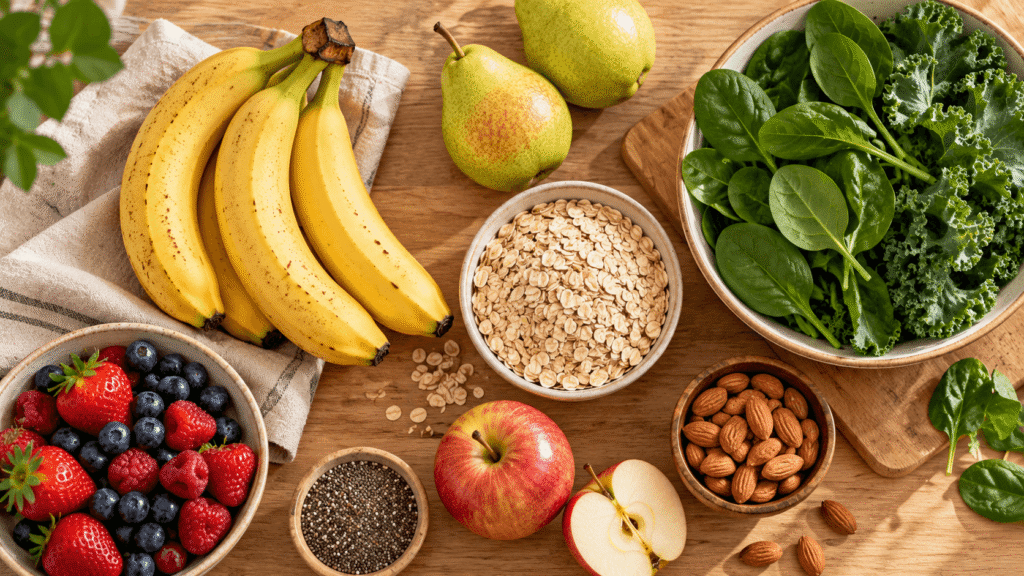
Fiber without enough fluid can make stool harder, not softer. Water and other fluids help the fiber do its job.
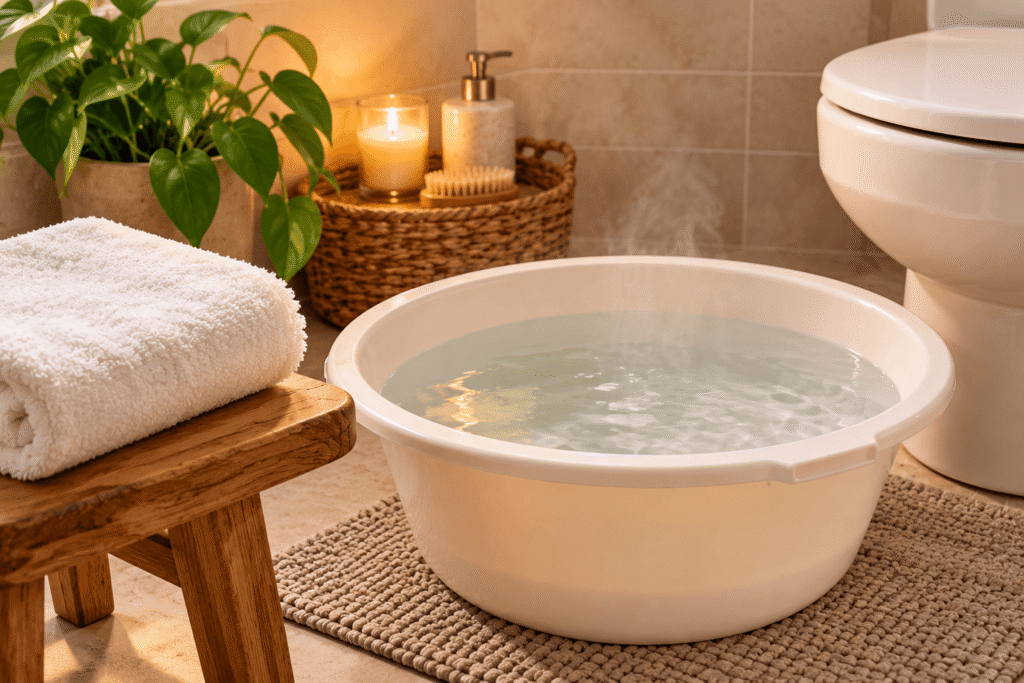
Warm water increases blood flow to the area and relaxes the anal sphincter, which eases pain, itching, and swelling. It’s one of the most consistently recommended home remedies in clinical literature.
Go when you feel the urge instead of waiting, and keep toilet time short. Prolonged sitting and straining are both cited as direct triggers for hemorrhoid flares.
Extended sitting increases pressure on the veins in this area. Regular movement and short breaks from sitting genuinely help.
Simple exercises, swimming, walking can help.

Pat dry instead of wiping hard, and consider unscented wipes over dry toilet paper if irritation is an issue.
“High fiber” is vague. Here’s what the numbers actually look like:
| Food | Fiber (approx.) |
|---|---|
| Pear, with skin (1 medium) | 5.5–6 g |
| Raspberries (1 cup) | 8 g |
| Green peas, cooked (1 cup) | 8.8 g |
| Navy beans, cooked (1/2 cup) | 9.6 g |
| Apple, with skin (1 medium) | 4.5–4.8 g |
| Prunes (1/4 cup) | 3.1 g |
A quick note on diet specifically — some fruits can work against you here, not help. If you want the detail: Which Fruit Is Not Good for Piles? →
We’d rather be upfront about this than let you keep trying the same routine indefinitely. Home care works well for mild, grade 1–2 hemorrhoids. It’s much less effective once hemorrhoids are larger, prolapsing, bleeding regularly, or keep coming back no matter what you change. At that point, the swelling itself needs to be treated directly, diet and lifestyle changes alone won’t shrink it.
Something worth knowing while you’re managing this at home: if you’re in the US and have been told a colorectal consult is 4–6 months out, that wait doesn’t mean your only option is to keep waiting. Many patients use that time to try home care first, and if it’s not working, look into faster options rather than waiting out the full window. It’s not something we’d normally need to mention, but we hear from enough patients stuck in that exact gap that it’s worth saying plainly.
Give home care about 1–2 weeks of honest, consistent effort. If symptoms are clearly improving, keep going. If there’s no real change, if you see blood, or if it keeps recurring, that’s your signal that home care has done what it can, and it’s time for an actual evaluation.
Curious what a laser-based option actually involves, if home care isn’t enough? How Effective Is Laser Treatment for Hemorrhoids? →
If you’ve given it a real two weeks and nothing’s changed, or if you’re facing a long wait for a US consult, it’s worth seeing what your options actually look like. Submit your case and we’ll review it within 24 hours, no obligation.
Clinical guidelines recommend about 25–30 grams of fiber daily, plenty of water, warm sitz baths, avoiding straining, and staying active. The 2024 ASCRS guideline gives these steps a strong recommendation for mild cases.
The Dietary Guidelines for Americans recommend 14 grams of fiber per 1,000 calories — about 28 grams a day on a 2,000-calorie diet. Clinical sources commonly cite 25–30 grams daily for managing hemorrhoids specifically.
If symptoms don’t improve within two to three weeks, keep coming back, or involve bleeding or worsening pain, it’s time to see a specialist rather than continue home care alone.
This article is for general information and isn’t a substitute for medical advice. Proctoclinic
Sources:
NIDDK; Cochrane systematic review (cited in ASCRS 2024 guidelines)
American Society of Colon and Rectal Surgeons (ASCRS), 2024 Clinical Practice Guidelines for Hemorrhoids
Cochrane systematic review on fiber supplementation and hemorrhoid symptoms

Advanced Laser Proctology · Amman
A specialist laser proctology clinic in Amman, Jordan. Serving international patients from the U.S., Europe, and the Arab world with minimally invasive anorectal care and same-week scheduling.
ISO 9001 Certified Clinic
9,000+ procedures completed
Jordan Trained Doctors
Lady doctor available for female patients
© 2026 Proctoclinic Jordan. All rights reserved.